
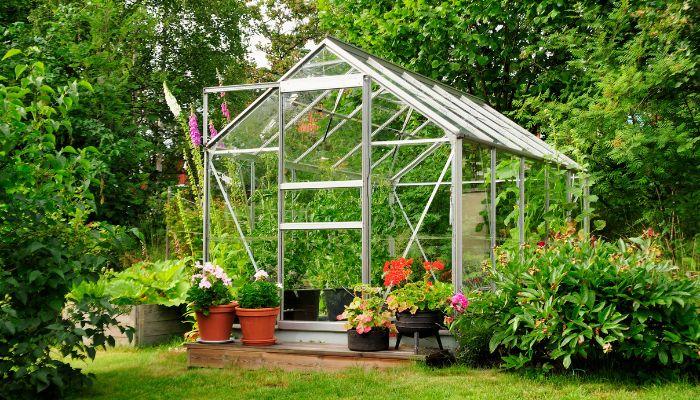
When you’re trying to create your own little plant haven, the same debate always comes up: should you build a greenhouse from scratch, or grab a ready-to-assemble kit? There isn’t one “right” answer. It really depends on your budget, how handy you are, and how soon you want to be watering seedlings inside your backyard greenhouse. No matter which path you choose, the goal is the same—build a warm, functional space where plants grow better (and you enjoy being in there, too).
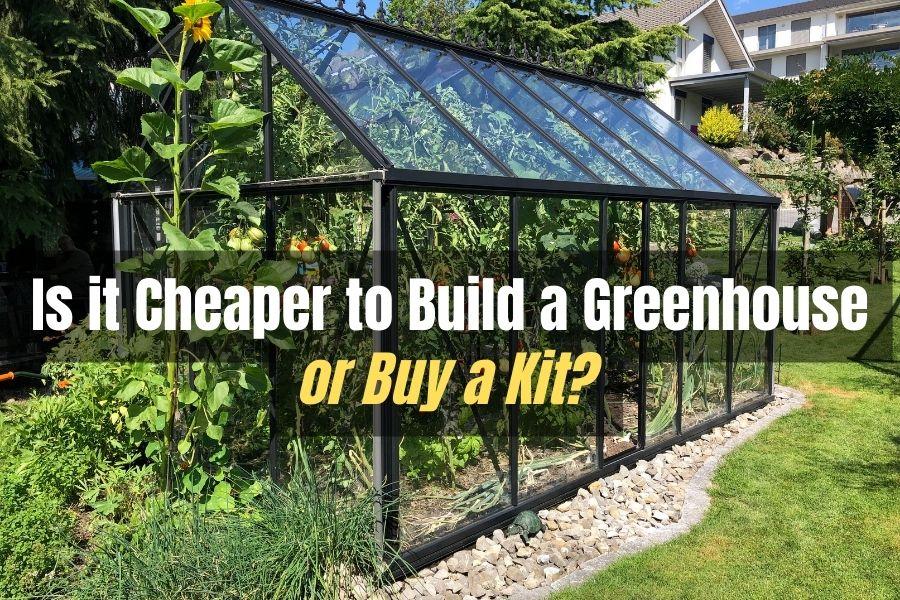
So… is it actually cheaper to DIY a greenhouse, or do small greenhouse kits win once you total everything up? Let’s run through a realistic example using a common hobby size and compare it to the kind of structures featured in our best greenhouse kits roundup.
Cost to Build a Greenhouse VS Small Greenhouse Kits
To keep this apples-to-apples, let’s use a typical hobby footprint—around 10′ x 6’—and compare two common options:
• Building a steel-frame greenhouse and covering it with polycarbonate panels
• Buying a similar-size polycarbonate greenhouse kit that’s already engineered and packaged
Building Your Own 10′ x 6′ Steel Frame Greenhouse with Polycarbonate
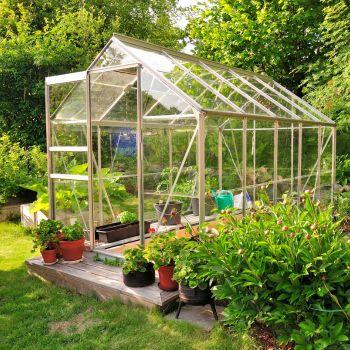
- Materials:
- Steel frame: For a basic 10′ x 6′ structure, steel tubing often lands around $250–$400, depending on local prices and thickness.
- Polycarbonate panels: Expect roughly $180–$300 for enough coverage for roof and walls (quality and thickness change the total fast).
- Fasteners and hardware: Brackets, screws, anchors, and connectors can easily tack on $40–$80.
- Foundation:
- If you do a simple concrete slab or footings, it’s common to spend about $250–$400 in materials for a small base.
- Doors and vents:
- A basic door setup plus a vent (or vent kit) often totals around $80–$150.
- Sealing and glazing supplies:
- Caulk, weatherstrip, glazing tape, trim pieces, and panel fasteners can add another $40–$80.
- Extras that sneak up on you:
- Paint, rust protection, replacement blades, drill bits, missing tools, and random “oops” purchases—budgeting an extra $75–$150 is smart.
Total estimated DIY cost: roughly $900–$1,200 (most people land close to $1,000)
This assumes you’re doing the labor yourself. If you need to hire help—welding, framing, concrete work, or even just an extra set of hands—your “DIY savings” can shrink quickly. That’s why it helps to map your overall greenhouse budget before buying materials.
Buying a 10′ x 6′ Steel & Polycarbonate Greenhouse Kit
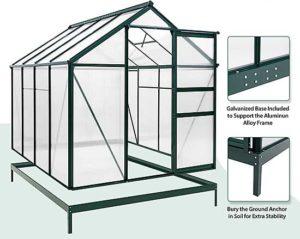
- Greenhouse kit:
- Mid-range kits in this size (steel or aluminum + polycarbonate) commonly fall around $1,300–$1,700, depending on the brand and included features.
- Delivery and freight:
- Shipping on full kits often adds $100–$300, depending on where you live and the retailer.
Total estimated kit cost: about $1,500–$2,000 (a common “real world” number is around $1,700)
Quick comparison:
- DIY build: ≈ $1,000 (not counting your time)
- Pre-made kit: ≈ $1,700
On paper, the DIY route looks about $700 cheaper. But the kit route starts looking better if you value speed, fewer mistakes, and a pre-tested design. And if you’d rather skip the sourcing and price hunting, you can sometimes find more affordable kits here—especially during seasonal promotions.
Note: DIY usually wins on raw materials, but you “pay” with time, trial-and-error, and skill. Kits cost more, but they bundle convenience, engineered plans, and support. The best choice depends on your schedule, confidence, and how much hassle you’re willing to tolerate.
The Pros & Cons of Building Your Own Greenhouse
Pros:
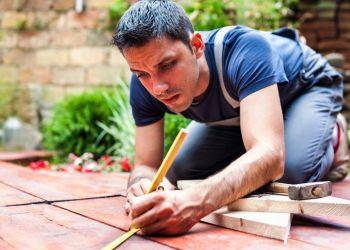
1. It’s built around your exact needs: You can choose the footprint, height, roof pitch, door placement—everything. Want taller sidewalls for tomatoes? A wider doorway for a wheelbarrow? You can design it your way. Some gardeners even build simple wooden frames if they’re comfortable with carpentry.
2. You can control spending: DIY lets you shop sales, buy locally, reuse materials, and choose budget-friendly designs. With careful planning, you can stay on the lower end of typical backyard greenhouse costs.
3. The pride factor is real: Walking into something you built yourself feels different. For a lot of gardeners, that sense of ownership is part of the fun.
Cons:
1. Time adds up fast: What looks like a weekend project often turns into multiple weekends, especially if weather, tool issues, or supply runs slow you down.
2. Not beginner-proof: You’ll need accurate measuring, square corners, solid bracing, and clean panel installation. If you’re not comfortable with that, the build can get frustrating.
3. Mistakes cost money: Poor sealing, miscut panels, or weak framing can lead to drafts, leaks, and heat loss. Over time, that can make it harder (and more expensive) to regulate greenhouse temperature.
Advantages & Disadvantages of Buying a Greenhouse Kit
Pros:
1. Fastest path to a finished greenhouse: The engineering is already done. You’re assembling a designed system rather than inventing one from scratch.
2. Guidance is built in: Better kits come with clear manuals, labeled parts, and sometimes videos. That structure is a huge stress reducer.
3. You have support if something goes sideways: Missing part? Panel doesn’t fit? You can contact customer service. With a DIY build, you’re the customer service.
Cons:
1. Higher upfront cost: You’re paying for engineering, packaging, instructions, and support. Most kits cost more per square foot than a resourceful DIY build.
2. Limited customization: You’ll get choices like size and glazing type, but you’re still working within a fixed design. If you need something oddly sized, DIY may fit better.
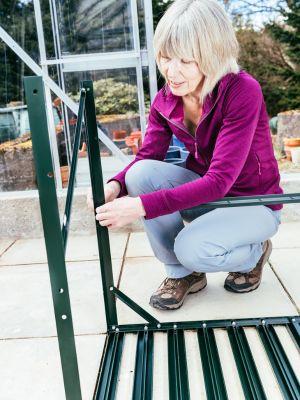
3. You still have to assemble it: A kit is easier than scratch-building, but it’s not “instant.” Plan for a day or two (and ideally a helper) for setup.
Smart Ways to Save Money While Going Green
1. Shop Smart
Start by comparing models and watching for sales. Retailers run seasonal deals all the time, and you can often find polycarbonate kits discounted here. With a little patience, it’s not unusual to save a few hundred dollars.
Polycarbonate kits are popular because they balance insulation and light well. If you catch one on sale, it can be a strong long-term value.
Also: look beyond the sticker price. Reviews, warranty length, and panel thickness often predict whether a “deal” stays a deal after a couple seasons.
2. Go the Hybrid Route
You don’t have to choose “all DIY” or “all kit.” A smart middle ground is buying a basic structure, then customizing the inside yourself—benches, shelves, hanging bars, potting stations, raised beds, and storage. Start with one of the top-rated small greenhouse kits and upgrade it over time.
3. Reuse for the Interior
Shelving and work surfaces don’t need to be fancy. Repurposed metal racks, leftover lumber, old pallets (sealed properly), and secondhand tables can reduce costs a lot. Just make sure anything reused can handle moisture and won’t collapse under trays and soil.
4. Spend on Efficiency (So You Save Later)
If you plan to use the greenhouse in cooler months, energy efficiency matters. Better sealing, fewer gaps, and quality glazing help you avoid “heating the outdoors.” That’s especially important if you want a year-round greenhouse.
In some climates, a lean-to greenhouse can also reduce costs because the house wall provides insulation and wind protection.
5. Buy Materials in Bulk with Friends
If you’re DIY building (or even outfitting a kit), pooling purchases can help. Bulk orders on polycarbonate, fasteners, soil amendments, and irrigation supplies often drop the per-person cost.
Frequently Asked Questions
Is it always cheaper to build a greenhouse?
Not always. DIY can be cheaper on materials, but if you need specialty tools, make mistakes, or hire labor, costs can creep up fast.
Why do greenhouse kits cost more?
You’re paying for engineering, packaging, instructions, and customer support. Kits also reduce the guesswork, which many gardeners find worth it.
What’s the best greenhouse option for beginners?
A small polycarbonate kit is often the easiest entry point. It’s less intimidating than designing a structure from scratch and usually has clear instructions.
What’s the biggest hidden cost in a DIY greenhouse?
Tools and “do-overs.” Even small mistakes—like miscut panels or poor sealing—can add up and reduce performance.
Do I need a foundation either way?
Usually yes. DIY builds and kits both benefit from a level, stable base. Even if the kit doesn’t require a slab, a solid foundation improves longevity.
Conclusion
Whether it’s cheaper to build a greenhouse or buy a kit comes down to what you’re counting. A DIY build can save money on paper and gives you total design freedom—but it asks for time, tools, and a willingness to problem-solve. A kit typically costs more up front, but it gets you to a finished greenhouse faster with fewer surprises.
If you like customizing and don’t mind the build process, DIY can be a satisfying win. If you’d rather start growing sooner and skip the engineering, a kit is usually the smoother path. Either way, smart planning and a focus on efficiency will help you get the most greenhouse for your dollars.


